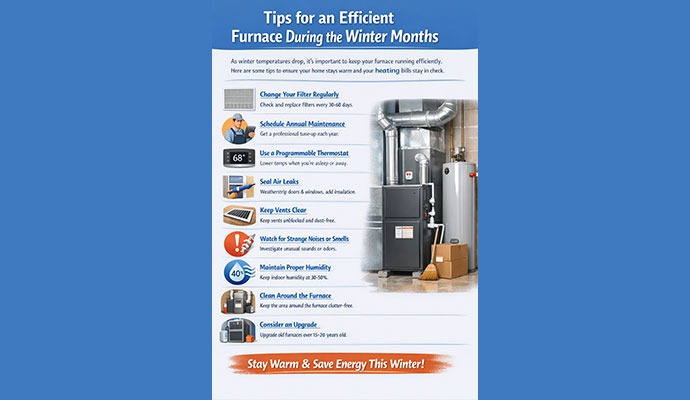
As winter temperatures drop, your furnace becomes one of the most important systems in your home. Keeping it running efficiently not only ensures comfort but also helps lower energy bills, extend equipment life, and prevent unexpected breakdowns. Here are practical tips to help your furnace perform at its best all winter long.
1. Change or Clean Your Furnace Filter Regularly
One of the simplest and most effective steps is replacing or cleaning your furnace filter.
- Check filters every 30–60 days
- Replace disposable filters or clean reusable ones
- Dirty filters restrict airflow, forcing your furnace to work harder
A clean filter improves efficiency, air quality, and system lifespan.
2. Schedule Annual Furnace Maintenance
Professional maintenance before or during the winter season is essential.
A furnace tune-up typically includes:
- Inspecting burners and heat exchangers
- Checking safety controls
- Lubricating moving parts
- Ensuring proper airflow and efficiency
Regular maintenance can improve efficiency by up to 15% and catch small issues before they become costly repairs.
3. Use a Programmable or Smart Thermostat
Lowering your thermostat when you’re asleep or away can lead to significant savings.
- Set temperatures 5–10 degrees lower at night or during work hours
- Smart thermostats learn your schedule and adjust automatically
- Avoid constantly adjusting temperatures manually
Consistency helps your furnace run more efficiently.
4. Seal Air Leaks and Improve Insulation
Heat loss forces your furnace to run longer than necessary.
- Seal gaps around doors and windows with weatherstripping or caulk
- Check attic, basement, and crawl space insulation
- Close fireplace dampers when not in use
A well-sealed home keeps warm air inside where it belongs.
5. Keep Vents and Registers Clear
Blocked vents reduce airflow and strain your furnace.
- Keep furniture, rugs, and curtains away from vents
- Make sure registers are fully open in commonly used rooms
- Vacuum vents periodically to remove dust and debris
Proper airflow allows even heating throughout your home.
6. Don’t Ignore Unusual Noises or Smells
Odd sounds or odors can signal a problem.
Watch for:
- Banging, rattling, or squealing noises
- Burning or metallic smells
- Frequent cycling on and off
Addressing issues early can prevent breakdowns during extreme cold.
7. Maintain Proper Humidity Levels
Dry winter air can make your home feel colder than it is.
- Ideal indoor humidity: 30–50%
- Consider using a whole-home humidifier
- Proper humidity allows you to feel warmer at lower thermostat settings
This reduces furnace workload while increasing comfort.
8. Keep the Area Around the Furnace Clean
A clutter-free furnace area improves safety and efficiency.
- Remove stored items around the unit
- Keep flammable materials away
- Ensure intake and exhaust pipes are clear of snow or debris
This helps maintain proper airflow and reduces fire risks.
9. Consider an Upgrade if Your Furnace Is Older
If your furnace is more than 15–20 years old, it may be time to consider replacement.
- New high-efficiency furnaces can reach 95%+ efficiency
- Modern systems offer quieter operation and better temperature control
- Upgrading can significantly reduce monthly heating costs
An efficient furnace keeps your home warm, safe, and energy-smart throughout the winter months. With routine maintenance, simple adjustments, and proactive care, you can maximize performance while minimizing costs and stress replacement. Wallace Heating & Air has the tools, expertise, and dedication to get the job done right the first time. We proudly serve our community with honest pricing, trusted advice, and dependable work.
Don’t sweat it—trust Wallace Heating & Air to keep you cool when it matters most!